Microsoft CEO Signals That Coding Alone Is No Longer the Key to Software Development
Microsoft CEO Satya Nadella says AI is transforming software development. Discover why problem-solving, judgment, and clear objectives may soon matter more than manually writing code.
On this page24 sections
For decades, aspiring software developers were given one clear piece of advice:
Learn how to code.
Master a programming language, understand syntax, memorize commands, and spend countless hours turning ideas into instructions that computers can understand.
But artificial intelligence is rapidly changing that traditional formula.
Microsoft CEO Satya Nadella has become one of the most influential voices describing this transformation. His message is not that coding is completely irrelevant. Instead, the bigger idea is more powerful:
"The future of software development will depend less on manually writing every line of code and more on defining the right problems, directing intelligent tools, and judging whether the final product actually works."
That shift could reshape not only how software is created, but also who gets the opportunity to create it.

Microsoft CEO Satya Nadella believes AI is changing the role of developers and the way software is created.
Code Is Becoming the Output, Not the Starting Point
Traditional software development begins with code.
A developer receives a requirement, chooses a programming language, designs the system, and manually writes the instructions needed to make the product work.
AI-first software development can begin somewhere else: with an objective.
Instead of starting with hundreds of lines of code, a person can describe what they want to create in natural language:
Build a dashboard that tracks customer complaints.
Create an app that organizes employee schedules.
Design a website that accepts reservations.
Automate a repetitive accounting process.
An AI coding assistant can then generate large portions of the technical implementation.
Microsoft has described this transition as a movement from focusing on code toward focusing on objectives. In this model, the developer defines the goal, guides AI agents, evaluates the results, and improves the product. Code remains necessary, but it increasingly becomes the generated output rather than the first input.
This is a profound change.
The most important question may no longer be:
“Can you write the code?”
It may become:
“Can you clearly explain what needs to be built—and determine whether the solution is useful, secure, and correct?”
Microsoft Is Already Using AI to Generate Code
This transformation is not simply a prediction about the distant future.
During a public discussion in April 2025, Nadella said that approximately 20% to 30% of the code in some Microsoft projects and repositories was being written by software, referring to AI-generated code. He also noted that the results varied depending on the programming language.
That figure does not mean AI independently built 30% of Microsoft’s products. Human developers still provide requirements, architecture, testing, review, security controls, and final accountability.
However, it shows that AI is already becoming an active participant in professional software creation.
Tasks that previously required developers to manually produce every function, test, or repetitive component can increasingly be assisted by tools such as GitHub Copilot.
The result is not necessarily the disappearance of developers. It is the transformation of their responsibilities.
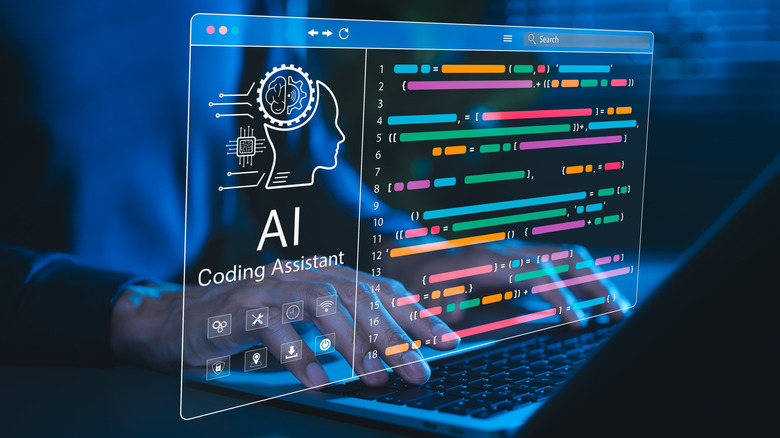
Suggested caption: AI tools can now translate natural-language instructions into working code, allowing developers to focus on broader product decisions.
The Real Skill Is Knowing What to Build
A person can generate thousands of lines of code and still create a terrible product.
The application may be confusing.
It may solve the wrong problem.
It may expose private information.
It may fail when used by real customers.
It may technically work but provide no meaningful value.
This is why software development has never been only about typing code. Coding is a method of implementation. The real objective is solving a problem for a person, organization, or community.
As AI becomes better at implementation, several human abilities become even more valuable:
Problem Definition
Before creating software, someone must understand the problem.
What are users struggling with? What causes the difficulty? Is software truly the right solution?
AI can produce an answer, but the quality of that answer depends heavily on the clarity of the objective.
Product Judgment
A functioning feature is not automatically a good feature.
Developers and product teams must decide what should be included, what should be removed, and what experience will genuinely help users.
Critical Thinking
AI-generated code can contain mistakes, security risks, unnecessary complexity, and incorrect assumptions.
A human must evaluate whether the output is reliable.
Domain Knowledge
Someone who deeply understands healthcare, finance, housing, logistics, education, or another industry may be able to create highly useful software by combining that expertise with AI tools.
Microsoft has highlighted this idea through examples of non-programmers using conversational AI and low-code tools to build applications for real business needs. These users may not know traditional programming languages, but they understand their problems, workflows, data, and desired outcomes.
Communication
Building with AI requires developers to express requirements clearly.
Vague instructions produce vague results. Precise objectives, constraints, examples, and success criteria give AI a better chance of producing useful work.
In other words, communication is becoming part of programming.
Does This Mean People Should Stop Learning to Code?
No.
That would be a dangerous interpretation.
Coding knowledge still helps developers understand what AI produces. It allows them to identify errors, optimize performance, investigate failures, improve architecture, and protect systems from security threats.
AI can generate code quickly, but speed does not guarantee quality.
Even Nadella has warned that careless “vibe coding” can create low-quality output when people use AI without strong tools, disciplined practices, or proper evaluation. His broader position is that developers remain central to creating great software, even as AI changes how they work.
The future may therefore create two different kinds of builders.
One group will use AI to produce simple applications without deep technical knowledge.
The other will consist of professional engineers who understand complex systems and can guide, review, secure, and improve AI-generated work.
Both groups may build software, but they will operate at different levels of complexity and responsibility.
[IMAGE SECTION: Add an illustration comparing traditional coding with AI-assisted software development]
Suggested caption: Developers are moving from manually producing every line of code toward guiding, reviewing, and improving AI-generated systems.
AI Makes Software Creation More Accessible
For years, a person with a great idea often needed one of three things:
The ability to program.
Enough money to hire developers.
A technical partner willing to build the product.
AI is beginning to weaken those barriers.
A teacher could create a tool for organizing student activities.
A small-business owner could build a basic inventory system.
A real-estate professional could create an application for tracking inquiries and property visits.
An operations employee could automate a repetitive reporting process.
They may still need expert support before launching a complex or sensitive product, but they can create prototypes and internal tools much faster than before.
Microsoft has showcased users creating applications by explaining their needs through ordinary language rather than manually programming every component. Its AI, low-code, and no-code products are designed to broaden participation in software creation beyond traditional engineering teams.
This could produce an explosion of new digital products.
But it could also produce an explosion of poorly designed, insecure, and unnecessary software.
That is why access to AI must be accompanied by judgment.
The Developer’s Role Is Expanding, Not Disappearing
The old image of a software developer is someone sitting in front of a screen, manually typing code for most of the day.
The emerging developer may spend more time:
Understanding users.
Defining objectives.
Designing system architecture.
Giving instructions to AI agents.
Reviewing generated code.
Testing different scenarios.
Protecting sensitive data.
Monitoring performance.
Deciding whether the product should be built at all.
This means the profession may become less focused on syntax and more focused on complete systems.
The ability to write a perfect function from memory may become less valuable than the ability to understand how several services, databases, users, policies, and AI agents should work together safely.
Coding will remain part of the job, but it will be surrounded by a much larger set of responsibilities.
A Warning for New Developers
The rise of AI creates a tempting shortcut.
A beginner can ask an AI tool to produce an application, see it running, and believe that they have mastered software development.
But creating a demonstration is different from operating a real product.
Real software must handle unexpected behavior, incorrect inputs, cyberattacks, increased traffic, changing requirements, accessibility needs, privacy rules, and long-term maintenance.
Research has also found that large language models can perform well on straightforward coding exercises while providing less consistent support for broader, realistic software-development tasks.
New developers should therefore use AI as a learning partner—not as a substitute for understanding.
They should ask:
Why did the AI choose this approach?
What could cause this code to fail?
Is there a security weakness?
Can the solution support more users?
What assumptions did the AI make?
How would I test the result?
The people who blindly accept AI-generated code may create fragile products.
The people who understand both software principles and AI-assisted workflows will be far more valuable.
What Should Future Software Professionals Learn?
The changing industry suggests that developers need a broader education.
Learning at least one programming language remains useful because it develops logical thinking and provides a foundation for evaluating AI output.
However, future professionals should also learn:
Systems Thinking
Understand how different components interact rather than focusing on one isolated piece of code.
User Experience
Learn how people behave, what confuses them, and what makes a digital product easy to use.
AI Collaboration
Know how to describe objectives, provide context, set constraints, and guide AI through multiple revisions.
Testing and Validation
Never assume generated code is correct simply because it looks convincing.
Cybersecurity and Privacy
AI can generate vulnerable software as easily as it can generate useful software.
Business and Domain Expertise
The best technical solution is useless when it solves a problem that nobody has.
Ethics and Accountability
Someone must remain responsible when automated systems make harmful or unfair decisions.
These skills are harder to automate because they require context, judgment, and responsibility.
The Question Is No Longer “Can You Code?”
The rise of AI is not eliminating the need for software development.
It is redefining what software development means.
Coding was once the main bridge between an idea and a working product. That bridge is becoming increasingly automated.
But automation does not eliminate the need for direction.
Someone must still choose the destination.
Someone must decide which problems matter.
Someone must recognize whether the result is valuable or harmful.
Someone must remain accountable when the system fails.
This is the deeper meaning behind the shift Microsoft and other technology leaders are describing.
Coding is still important—but coding alone is no longer enough.
The most successful developers of the AI era will not necessarily be the people who type the fastest or memorize the most programming languages.
They will be the people who can combine technical understanding with creativity, communication, critical thinking, domain expertise, and human judgment.
Final Thought
AI may eventually write most of the code behind the software we use.
But it cannot automatically guarantee that the software deserves to exist.
The future belongs not simply to those who know how to code, but to those who know what to build, why it matters, and how to make it work responsibly.
Comments
Loading…